The Air Fryer Trick That Makes Volume Eating Actually Sustainable
Quick Answer: Air frying vegetables at high heat with minimal oil concentrates their natural flavor through caramelization, giving volume-eating meals real texture and taste instead of the bland, watery result of steaming or boiling — making the whole approach easier to stick with.
Volume eating works on paper — big plates, low calories, feeling full. The problem is most people quit because steamed vegetables get boring fast. The fix isn’t a different diet, it’s a different cooking method.
Why does steaming fail where air frying succeeds for volume eating?
Steaming and boiling cook vegetables through moist heat, which is efficient but doesn’t trigger the Maillard reaction — the browning process that creates deep, savory flavor. The result is technically low-calorie and filling by volume, but often mushy and bland, which is exactly the texture that makes volume eating feel like a chore rather than an actual meal.
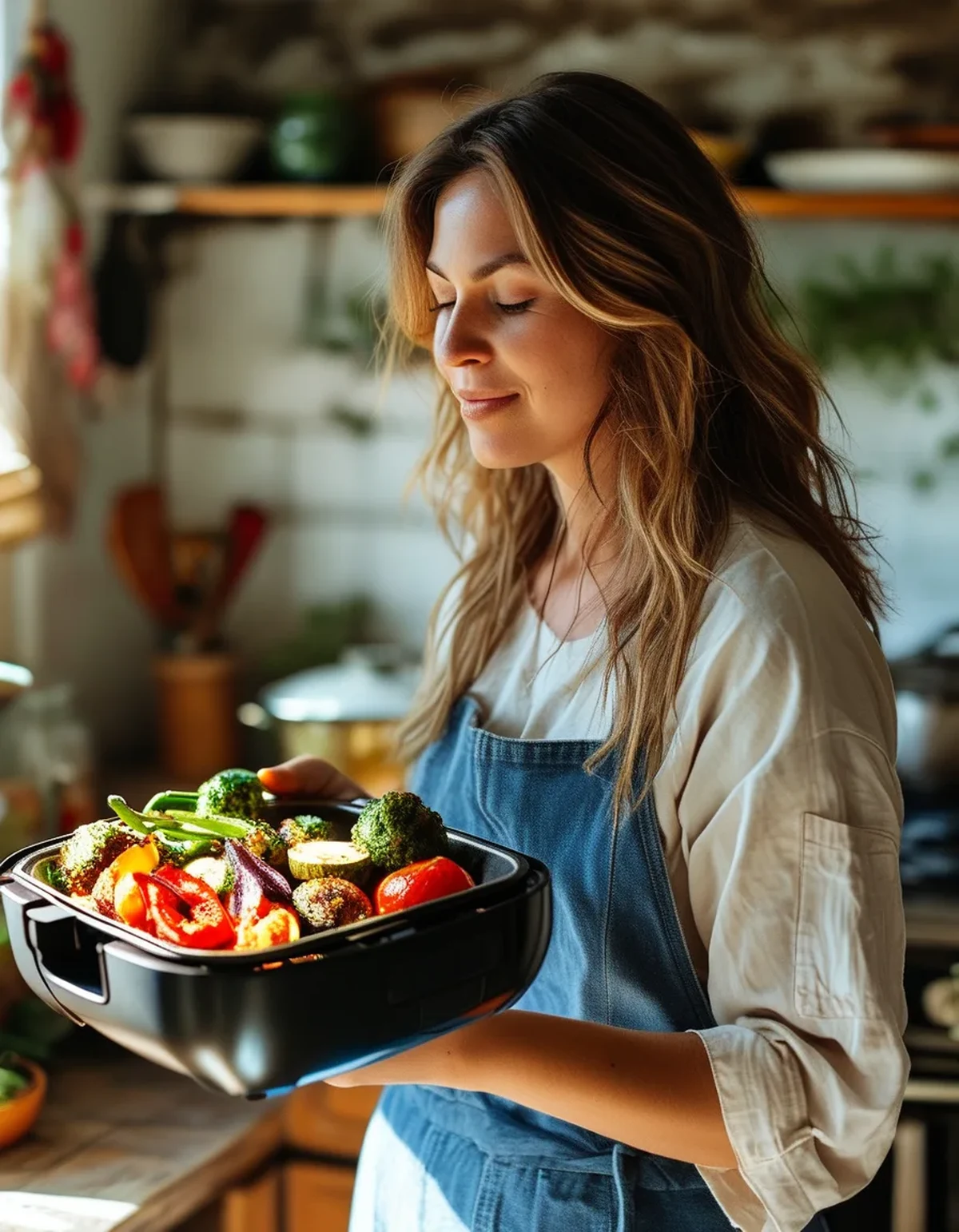
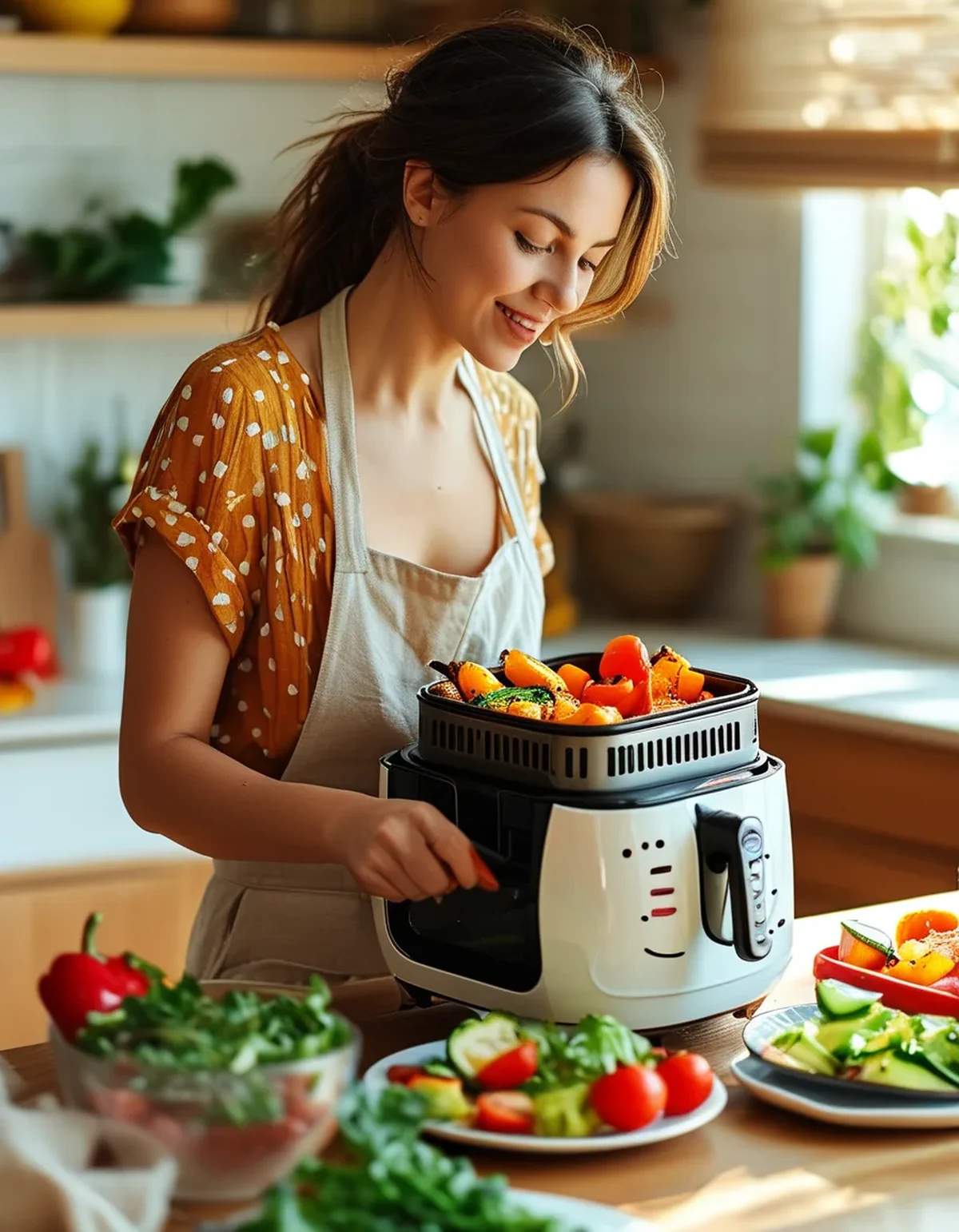
Air frying uses high, dry heat with air circulation, which browns and slightly crisps vegetable surfaces while the inside stays tender — closer to roasting, but faster and using a fraction of the oil a pan-roast would need.
How much oil does this actually require to work?
Surprisingly little — a light mist or half-tablespoon toss per large batch is usually enough to help browning along without adding meaningful calories to a volume-focused meal. Cooking spray applied directly to vegetables (rather than heavy oil tossing) keeps the calorie cost minimal while still achieving the crisped texture that makes the vegetables taste worth eating.
Does this work for all vegetable types equally?
Cruciferous vegetables (broccoli, cauliflower, brussels sprouts) and root vegetables respond especially well, developing crispy edges that add genuine textural interest to a big plate of otherwise soft food. Watery vegetables like zucchini or tomatoes need slightly less time and a hotter setting to avoid turning mushy, since they release moisture as they cook.
What Nobody Tells You About Volume Eating and Texture
Most volume-eating advice focuses entirely on calorie density and portion size, but rarely addresses that texture variety is what actually determines whether a big plate feels satisfying or just large. A plate of all-soft, all-similar textures (steamed vegetables, plain rice, ground protein) is less satisfying bite-for-bite than the same calorie count with some crispy, some chewy, and some tender elements mixed together.
It’s also rarely mentioned that texture contrast slows down eating pace naturally, since crispy elements require more chewing — and slower eating is independently linked to better fullness signaling from the brain.
What’s a practical air fryer volume-eating routine?
Batch roasting 2-3 vegetable types on Sunday (a tray of broccoli, a tray of sweet potato, a tray of bell peppers) at 400°F for 12-15 minutes each provides a texture-varied base for several days of bowls. Reheating in the air fryer for 2-3 minutes (rather than the microwave) re-crisps the edges instead of steaming them soft again, which preserves the exact texture advantage that made them appealing in the first place.
FAQ: Air Fryer Volume Eating Questions, Answered
Does air frying vegetables reduce their nutrient content?
Minimally — nutrient loss is generally comparable to or less than boiling, since less water-soluble vitamin leaching occurs without submerging vegetables in water.
Can this method work for meal prepping a full week at once?
Yes, though vegetables reheated from frozen-stored batches lose some crispness compared to fresh-roasted; freezing works better for soups or stews than for texture-dependent roasted sides.
Is a large air fryer necessary, or does a small one work for meal prep?
A larger basket or tray-style air fryer speeds up batch cooking significantly — a small single-basket model works but requires more rounds to prep a full week’s vegetables.
TL;DR:
- Air frying browns vegetables through dry heat, creating flavor steaming and boiling can’t
- A light oil mist is enough to get crisped texture without meaningful added calories
- Texture variety (crispy, tender, chewy) makes big plates feel satisfying, not just large
- Reheat leftovers in the air fryer, not the microwave, to preserve the crisp edge
Volume eating doesn’t fail because of the calorie math — it fails when the food is boring, and an air fryer is the cheapest fix for that specific problem.
Keep Reading
This article is for general informational purposes only and is not medical advice. Always consult a qualified health professional for guidance specific to you.