Volume Eating at Restaurants: Order Big, Leave Right
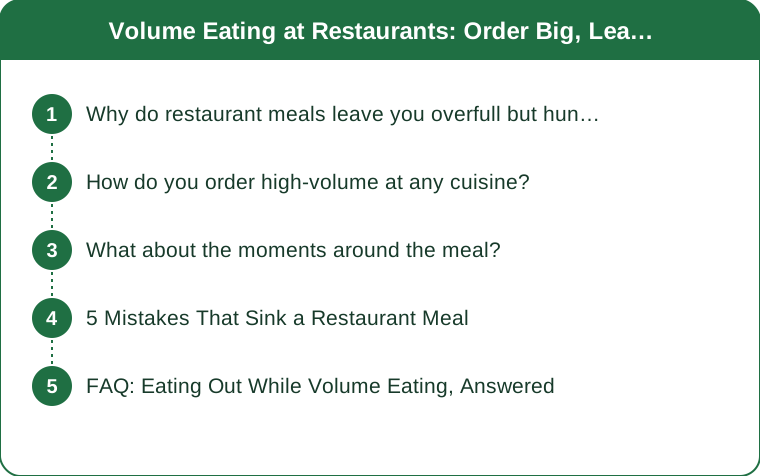
Quick Answer: Restaurant food fights the volume approach because kitchens add energy density everywhere — oil, butter, refined starch — and vegetables arrive as garnish. The workaround is structural, not willpower: order a lean protein anchor, double the vegetables via swaps and sides, start with broth or a plain salad, get rich sauces on the side, and arrive normally hungry instead of starving. It works at essentially every cuisine, and one dense dinner never breaks anything anyway — the pattern is the diet, not the plate.
The menu is a list of ingredients wearing costumes. Order the ingredients.
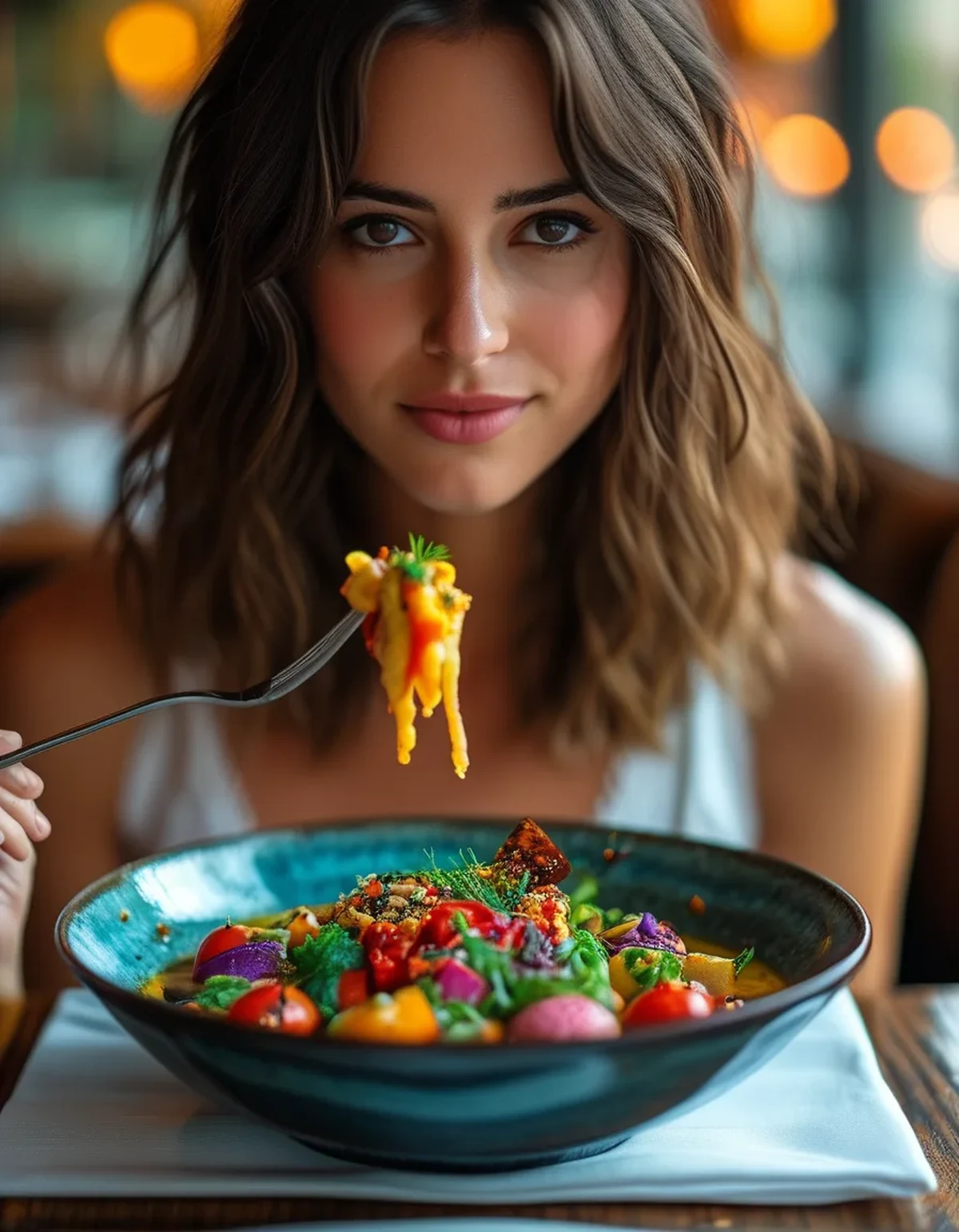
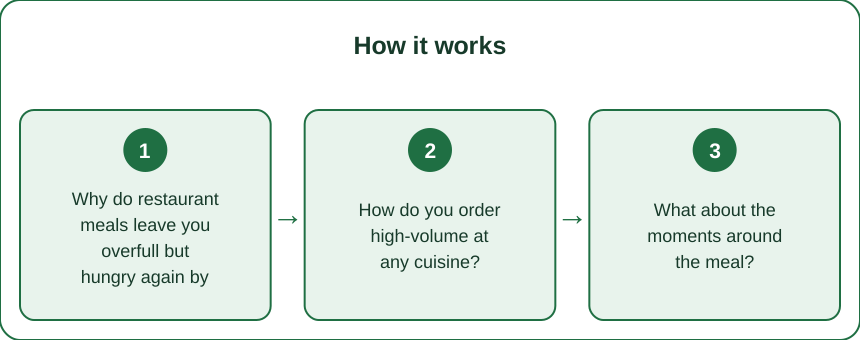
Why do restaurant meals leave you overfull but hungry again by ten?
Because restaurants optimize for pleasure per bite, which is the exact inverse of fullness per calorie.
Professional kitchens add fat because fat carries flavor. The sauteed spinach came with a tablespoon of butter; the grilled chicken was brushed with oil; the vinaigrette is mostly oil. None of this is scandal — it is why restaurant food tastes better than yours — but it doubles or triples the energy density of dishes that sound light.
Vegetables are staged, not served. A typical entree is a large protein, a pile of refined starch, and a decorative vegetable presence. The water-and-fiber bulk that drives fullness is the one component portioned smallest.
Refined starches digest fast and vacate fast. The white rice, pasta, and bread that anchor most entrees produce a big full feeling that fades on schedule — which is the overfull-at-8, snacking-at-10 pattern in one sentence.
Menu language launders density. Crispy means fried. Creamy, buttery, glazed, smothered, loaded — each word is a candid disclosure wearing a nice font. Meanwhile a salad with fried chicken, cheese, candied nuts, and creamy dressing outscores the burger it sat next to.
And the context works on you. Arriving ravenous, a free bread basket, family-style pacing, a drink before the entrees — the structure of eating out front-loads several hundred calories before your actual meal exists. Volume eating at restaurants is mostly about interrupting that structure, not about finding the magic dish.
How do you order high-volume at any cuisine?
One framework, then local execution: protein anchor, doubled vegetables, starch as a side character, sauce on the side.
The universal moves:
Start with broth or plain greens. A brothy soup or a simply dressed salad is the classic volume opener — high water, real fullness, arrives while you are hungriest.
Anchor with lean protein, grilled, roasted, or seared: it is the most filling macronutrient per calorie and every kitchen has it.
Ask the two magic questions: can the starch be swapped for vegetables, and can the sauce come on the side? Kitchens say yes constantly; the swap question alone converts half of any menu into volume plates.
Cuisine by cuisine:
Mexican: fajitas are the category champion — a pile of grilled protein and peppers where you control the assembly. Bowls over burritos, salsa generously, cheese and sour cream as accents.
Italian: grilled fish or chicken plus a big salad, vegetable sides, and a shared pasta as the flavor event rather than the foundation.
Sushi: miso, edamame, sashimi or a couple of simple rolls, seaweed salad — the rare cuisine that volumes well by default; the fried and mayo-sauced specialty rolls are where density hides.
Steakhouse: quietly excellent — a lean cut, steamed or grilled vegetables, a plain baked potato you dress yourself.
Diner brunch: eggs or an omelet loaded with vegetables, fruit on the side, one pancake for the table instead of a stack for yourself.
Order first when you can. Committing before hearing four indulgent orders keeps the plan yours — a small, well-documented quirk of group dining worth exploiting.

What about the moments around the meal?
The meal is decided before it starts and settled after it ends. Manage the edges.
Do not arrive starving. Skipping meals all day to bank for dinner is the classic backfire: you land at the table with maximum hunger and minimum judgment, and the bread basket does the ordering. A normal breakfast and lunch, or a protein-forward snack an hour before, produces a better dinner than an empty stomach ever has.
Decide the bread basket on purpose. One piece enjoyed slowly, or waved off entirely — either works. The failure mode is absent-minded refills while reading the menu, which is a few hundred calories with no memory attached.
Handle drinks with the same structure. Alcohol and sweet drinks add density with zero fullness, and they erode the ordering plan you walked in with. A sparkling water between drinks, or drinks after ordering, keeps the structure intact.
Pace to the slowest eater. Fullness signals run fifteen to twenty minutes behind your fork. Restaurant portions plus fast eating outruns the signal completely; putting the fork down between bites lets the volume you ordered actually register.
Split dessert or skip it by preference, not penance. Three bites of a shared dessert is participation; a solo dessert after a full entree is mostly momentum.
And resume normal life at the next meal. No compensating skip, no punishment workout, no verdict. One dense dinner is weather; the pattern is climate. The next ordinary breakfast is the entire recovery plan.
5 Mistakes That Sink a Restaurant Meal
1. Banking calories by starving all day. Arriving ravenous guarantees the fastest, densest ordering of your week plus a bread-basket prologue. Eat normally beforehand; hunger management is the actual skill.
2. Trusting the word salad. A crispy-chicken caesar with croutons, parmesan, and creamy dressing routinely outscores a cheeseburger. Judge dishes by their nouns and adjectives — grilled, fried, creamy — not their category.
3. Treating the bowl as automatically virtuous. Grain bowls stack rice, dressing, cheese, crispy toppings, and avocado into remarkable totals. The build-your-own bowl is only as light as its builder.
4. Drinking the first thirty minutes. Two drinks before ordering means ordering hungrier, looser, and later — the plan rarely survives. Order food first, then drink at leisure.
5. Declaring the night ruined and proving it. The dense dinner becomes a dense weekend only if you decide it does. The people who stay lean while eating out constantly are simply the ones who return to pattern at the very next meal.
FAQ: Eating Out While Volume Eating, Answered
What is the single best restaurant order if I want to leave full?
A broth-based or salad starter, then grilled protein with doubled vegetables and sauce on the side. It is available in some form at nearly every restaurant in America, and it reliably out-fills entrees with twice its calories.
Are restaurant salads a safe default?
Only the plain ones. Fried proteins, cheese, candied nuts, tortilla strips, and creamy dressings turn salads into the menu’s stealth heavyweights. A salad with grilled protein and vinaigrette on the side is the version that earns the reputation.
How do I handle family-style or shared plates?
Serve yourself a deliberate plate once instead of grazing from the middle — portion awareness collapses when food never stops arriving. Anchor your plate with the protein and vegetable dishes and treat the fried and creamy platters as accents.
Is it rude to ask for swaps and sauce on the side?
No — these are among the most common requests kitchens receive, and vegetable-for-starch swaps are usually a listed option. Ask plainly and tip normally; nobody in the kitchen is grading your order.
TL;DR:
- Restaurants maximize flavor per bite with oil, butter, and refined starch, which is the exact opposite of fullness per calorie.
- The universal order: broth or greens first, lean protein anchor, vegetables doubled via swaps, sauce on the side.
- Manage the edges — arrive normally hungry, decide the bread basket deliberately, order before drinking, pace slowly.
- One dense meal changes nothing; the next ordinary meal is the whole recovery plan.
Use the two magic questions at your next dinner out — starch swap, sauce on the side. That is 80 percent of this entire guide in one sentence to a server.
Keep Reading
This article is for general informational purposes only and is not medical advice. Always consult a qualified health professional for guidance specific to you.