Volume Eating When It Gets Cold: The Salad Habit Collapse
Quick Answer: Volume eating collapses in cold weather because most high-volume foods are served cold, and your body actively resists cold food when ambient temperature drops. The fix is swapping raw volume for cooked volume - roasted vegetables, brothy soups, and steamed greens deliver the same fullness per calorie in a form you’ll actually finish.
It happens every single year around late September. The giant salads that carried you through July suddenly feel like a chore, and by November you’ve quietly stopped and can’t say exactly when. This isn’t a motivation failure. It’s a solvable format problem.
Why does volume eating fall apart when it gets cold?
Volume eating works by filling your stomach with low-calorie-density food - mostly water and fiber - so that fullness signals fire before your calorie total climbs. The problem is that the highest-volume, lowest-density foods happen to be the ones we default to serving cold: raw greens, cucumber, raw peppers, cold fruit.
When ambient temperature drops, your body prioritizes maintaining core temperature, and cold food creates a small thermal cost you register as unappealing. It’s not imaginary - appetite for cold foods measurably declines in cooler conditions.
Meanwhile, the foods that feel right in cold weather - stews, pasta, baked things - tend to be calorie-dense by construction. So the season doesn’t just remove your tool, it hands you the opposite one.
What are the highest-volume warm foods?
Ranked roughly by volume per 100 calories:
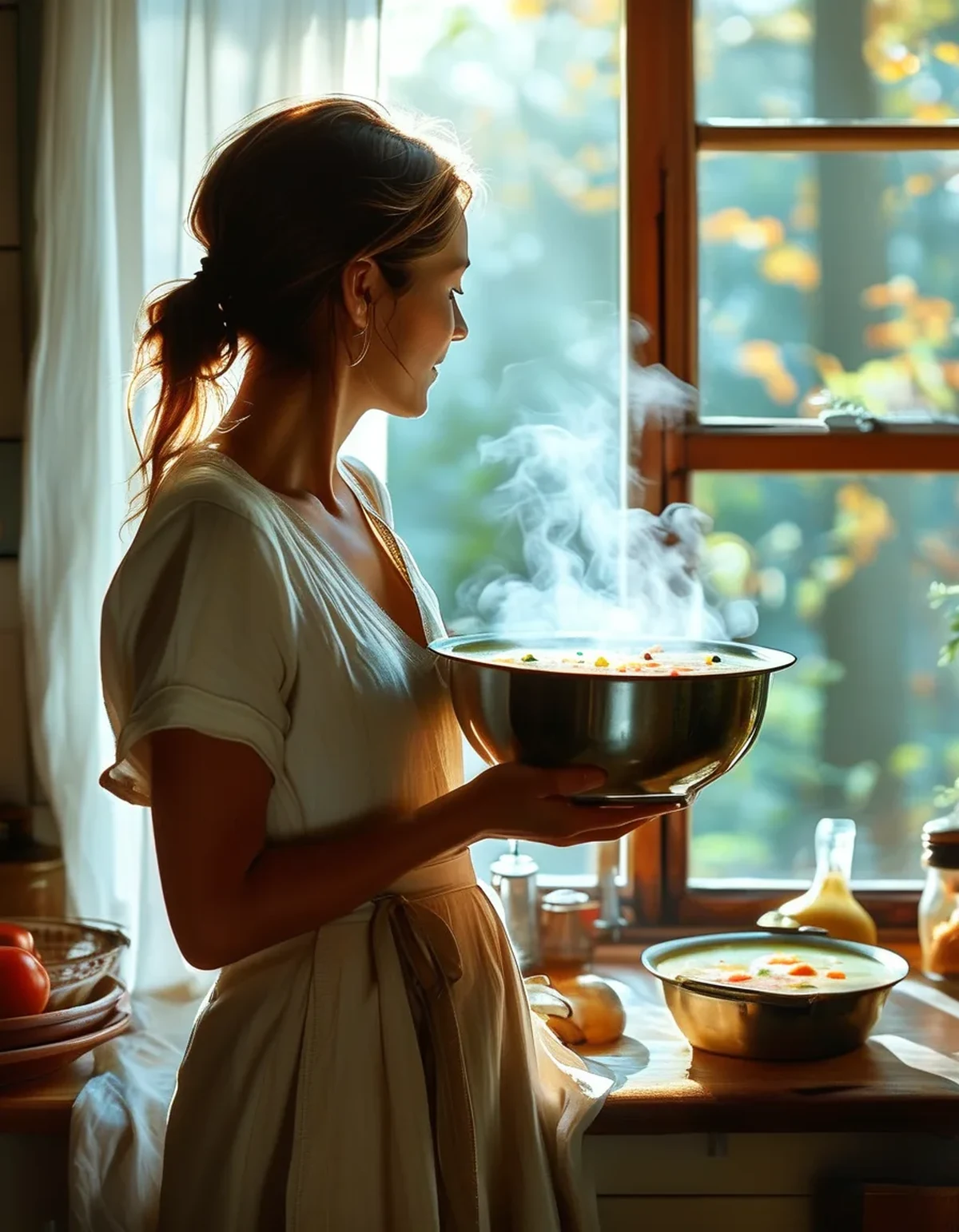
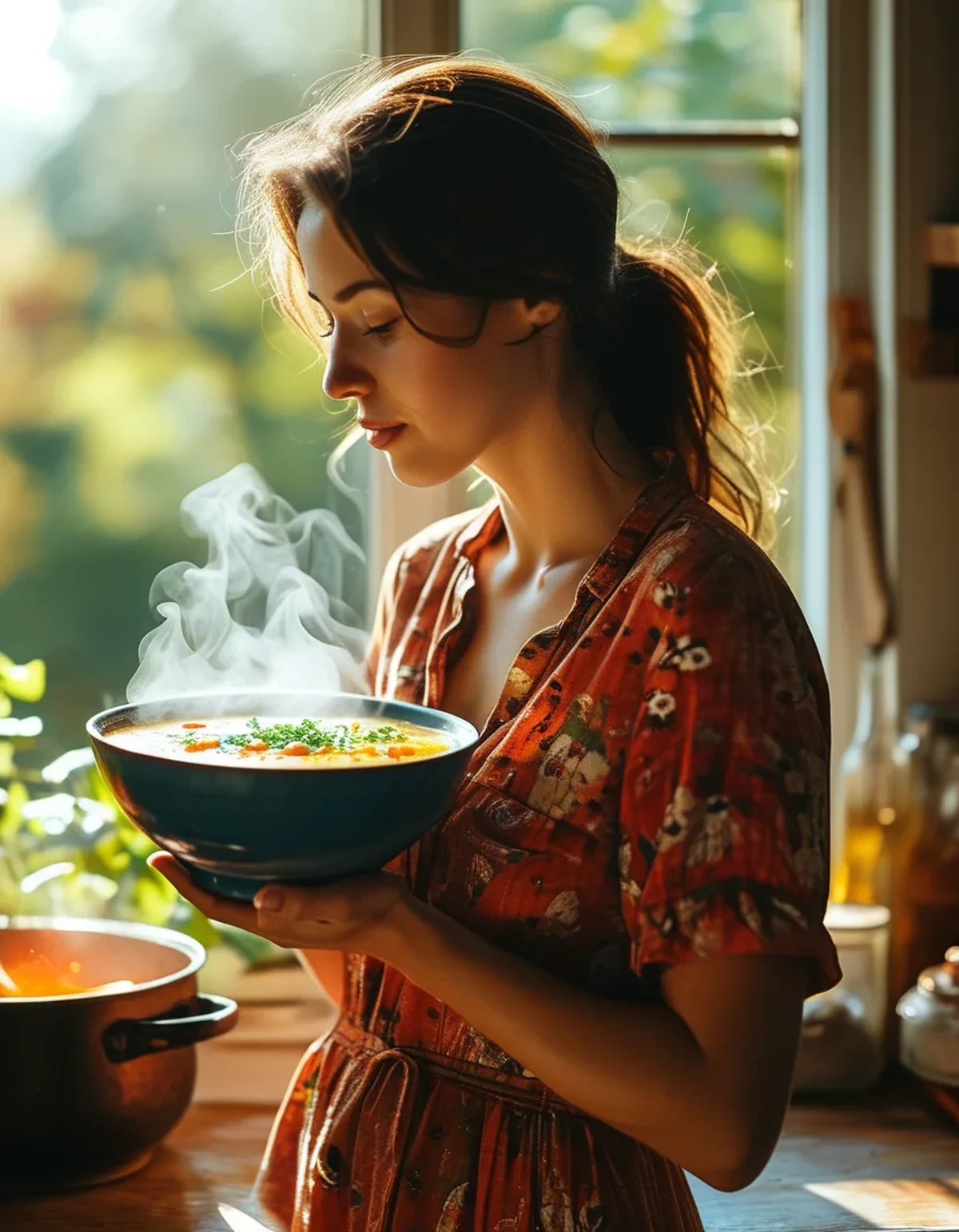
Brothy vegetable soup is the single best swap. A large bowl - 500 to 600g - of vegetable and broth soup often lands between 120 and 200 calories, which is comparable to a big salad but arrives hot.
Roasted non-starchy vegetables shrink during cooking, which is the one catch - a full sheet pan of zucchini, peppers, and mushrooms cooks down considerably. Roast more than looks reasonable. Two pounds raw is one serving’s worth of satisfying volume.
Steamed or sauteed leafy greens collapse dramatically, so use them as a component rather than the bulk.
Cabbage is the underrated star of cold-weather volume eating. It holds its structure when cooked, absorbs flavor, and stays extremely low density. Braised cabbage with a little stock and vinegar is enormous for the calories.
Spaghetti squash and shredded root vegetables bridge the gap between the pasta-and-comfort craving and actual volume.
How do I build a cold-weather volume meal?
Use a simple three-part structure.
Base (large, warm, low density): brothy soup, braised cabbage, roasted mixed vegetables, or spaghetti squash. Aim for 400-500g cooked weight.
Protein (moderate, satiating): 25-35g protein from chicken thigh, white fish, lentils, tofu, or beans. Protein does most of the actual satiety work; volume just buys you room.
Flavor (small, calorically cheap): vinegar, mustard, miso, chili crisp, herbs, citrus. This is where cold-weather volume meals usually fail - people build something huge and bland, eat it twice, and abandon the whole approach.
A worked example: 500g of vegetable-and-white-bean soup, a 120g chicken thigh shredded in, a spoonful of harissa and a squeeze of lemon. Roughly 400 calories, and it takes real time to eat.
5 Mistakes Everyone Makes Switching to Warm Volume Eating
1. Under-roasting the vegetable quantity. Vegetables lose 30-50% of their volume when roasted. Cook double what looks right or you’ll finish in four minutes and go looking for more.
2. Using creamy soups instead of brothy ones. A cream base can quadruple the calorie density while looking identical in the bowl. Brothy is the whole point.
3. Letting the flavor go flat. Cold volume meals get away with less seasoning because of texture contrast. Warm ones don’t. Acid and heat - vinegar and chili - are what make a huge bowl of vegetables interesting on day nine.
4. Dropping protein because the bowl looks full. Volume creates the space; protein creates the actual staying power. A giant bowl of vegetables with no protein leaves you hungry in 90 minutes, and that’s the meal people blame for the strategy not working.
5. Trying to eat warm salads. Wilted greens in a bowl satisfy nobody. Change the food, not the temperature of the same food.
FAQ: Cold-Weather Volume Eating Questions, Answered
Does hot food actually keep you full longer?
There’s some evidence that warm meals produce slightly higher subjective satiety than identical cold ones, though the effect is modest. The bigger factor is simply that you’ll eat the warm one at all.
Is soup really as filling as a salad?
Brothy soup often scores higher on satiety measures than the same ingredients eaten solid with a glass of water alongside, likely because the liquid stays in the stomach with the solids rather than passing through separately.
Can I batch-prep warm volume meals?
Soups and braised cabbage reheat well. Roasted vegetables go soggy by day three - roast those in smaller batches, twice a week.
TL;DR:
- Volume eating collapses in fall because the highest-volume foods are served cold and cold food loses appeal as temperatures drop
- Swap raw volume for cooked volume: brothy soups, braised cabbage, roasted vegetables, spaghetti squash
- Roast double what looks right - vegetables lose 30-50% of volume when cooked
- Keep protein at 25-35g per meal; volume buys room, protein buys staying power
- Acid and heat are what keep large warm bowls interesting past week one
The strategy still works in October. It just needs a different serving temperature.
Keep Reading
This article is for general informational purposes only and is not medical advice. Always consult a qualified health professional for guidance specific to you.