The Volume Eating Grocery List: 15 Staples That Make Filling Meals Easy
Quick Answer: A volume eating grocery list centers on high-water, high-fiber foods — leafy greens, broth-based soups, berries, air-popped popcorn, and lean proteins — that deliver large portion sizes for relatively few calories, making meals genuinely filling without the calorie math feeling restrictive.
Volume eating works because of what’s in your cart, not willpower at the dinner table. Stock the right staples and big, satisfying portions happen almost automatically.
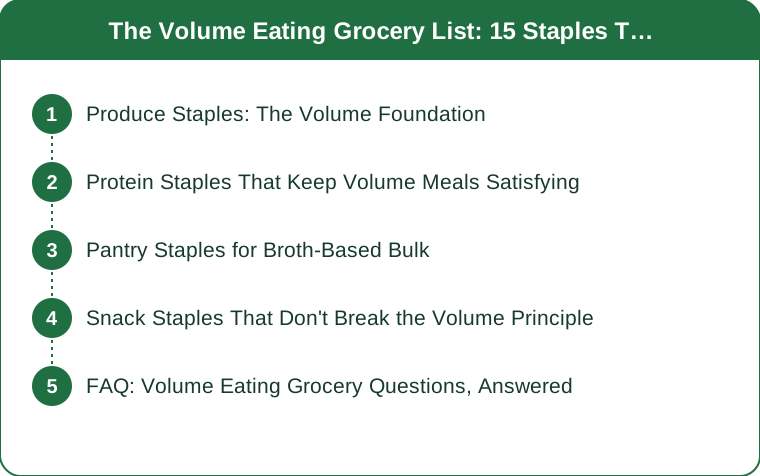
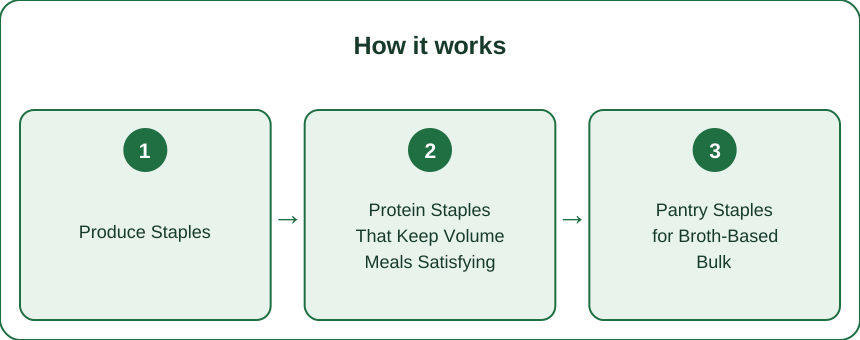
Produce Staples: The Volume Foundation
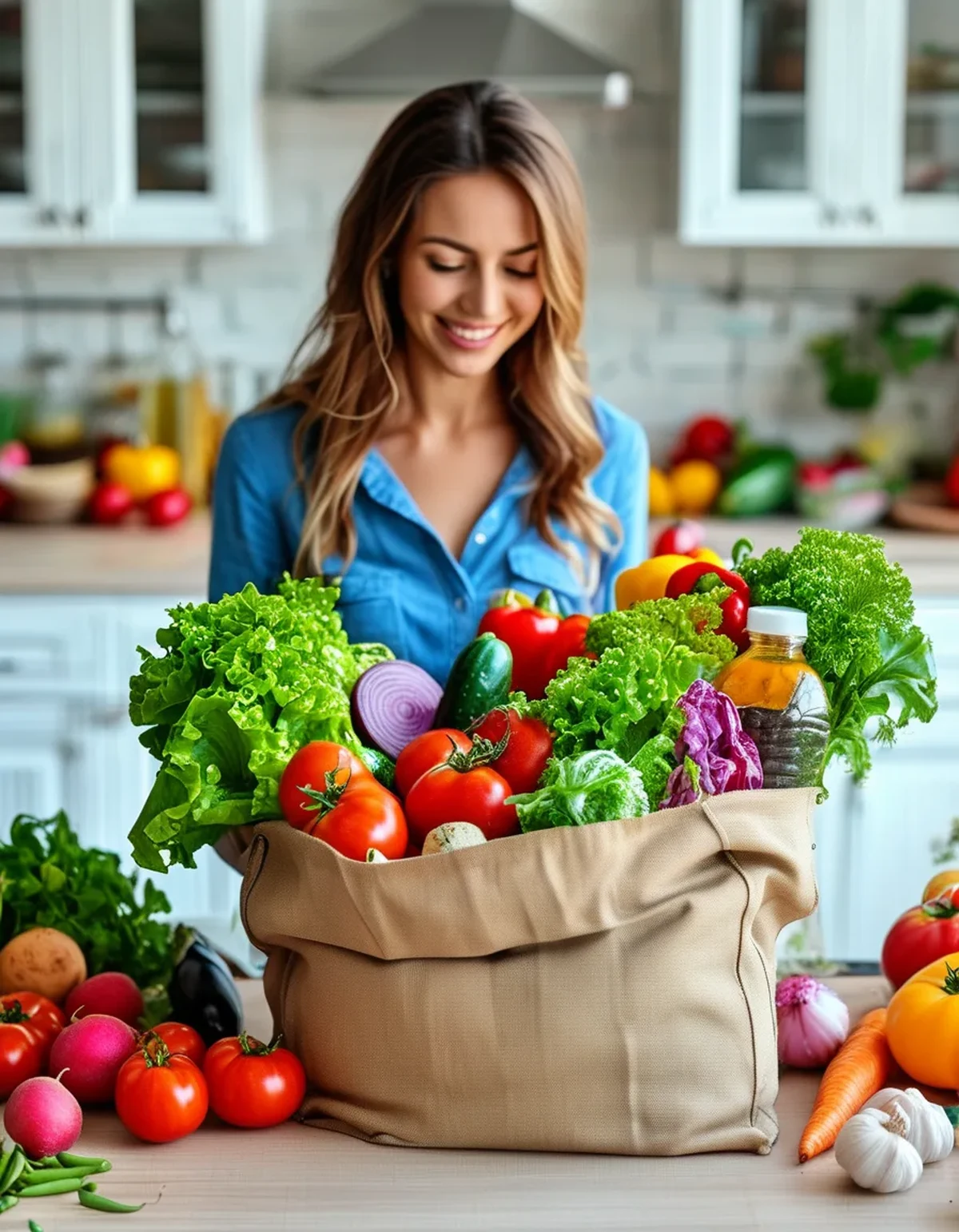
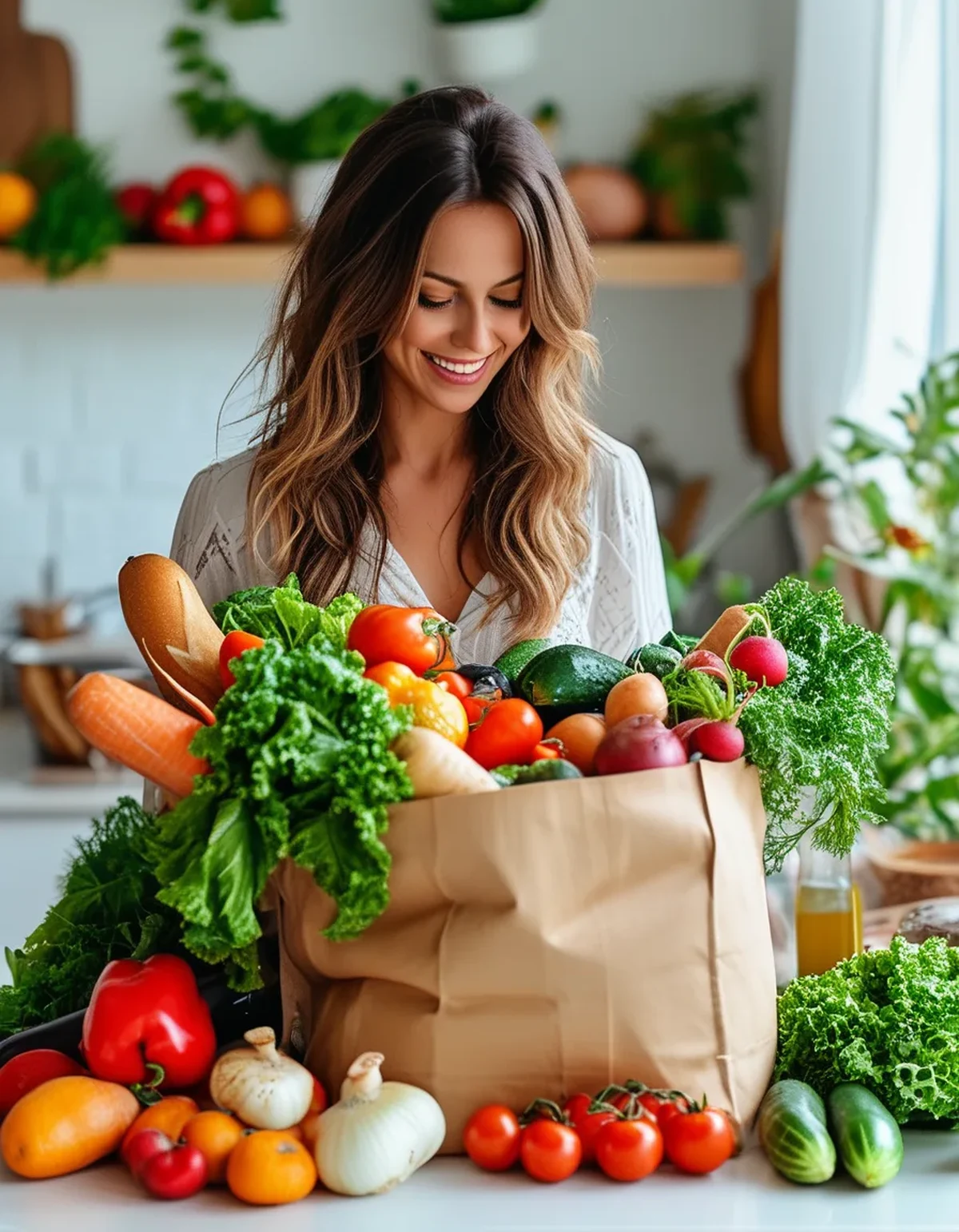
Leafy greens (spinach, romaine, kale), cucumbers, zucchini, bell peppers, and berries form the base of most volume meals — high water content means large portions for relatively few calories, and the fiber adds real fullness that lasts.
Protein Staples That Keep Volume Meals Satisfying
Chicken breast, white fish, egg whites, and Greek yogurt provide protein without adding much bulk-reducing density to your meal — protein is what makes a large volume meal actually satisfying rather than just physically full.
Pantry Staples for Broth-Based Bulk
Low-sodium vegetable or chicken broth, canned diced tomatoes, and dried lentils are the backbone of volume soups — broth-based dishes are one of the most effective volume eating strategies because liquid volume fills the stomach with minimal calories.
Snack Staples That Don’t Break the Volume Principle
Air-popped popcorn, rice cakes, and cucumber slices with hummus — big portion size, genuinely filling, without derailing the calorie-density approach the way regular chips or crackers would.
FAQ: Volume Eating Grocery Questions, Answered
Is frozen produce as good as fresh for volume eating?
Yes — frozen vegetables and berries retain similar fiber and water content, and they’re often more budget-friendly and reduce food waste from spoilage.
Do I need to buy special low-calorie products?
No — the volume eating approach works with whole, minimally processed foods you likely already recognize; no specialty ‘diet’ products are necessary.
How much should I budget for a week of volume eating staples?
Most people find it comparable to or slightly less than a typical grocery bill, since produce and pantry staples are generally less expensive than processed convenience foods.
TL;DR:
- Volume eating success starts with what’s in your cart, not willpower at mealtime
- Leafy greens, broth-based soups, and berries deliver big portions for few calories
- Protein (chicken, fish, Greek yogurt) is what makes volume meals actually satisfying
- Frozen produce works just as well as fresh and is often more budget-friendly
Keep Reading
This article is for general informational purposes only and is not medical advice. Always consult a qualified health professional for guidance specific to you.