The Volume Eating Guide: Bigger Plates, Smarter Calories
Volume eating flips diet logic on its head: instead of eating less food, eat MORE of the foods that weigh a lot and cost little — the water-and-fiber-rich plates that fill your stomach before they fill your calorie budget. The science of feeling full, engineered deliciously.

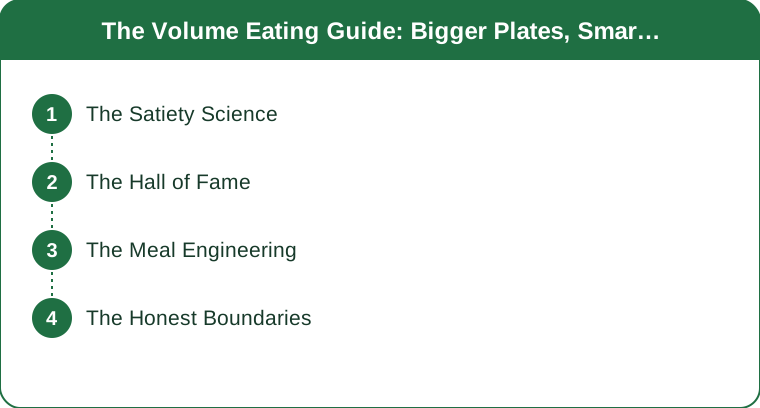
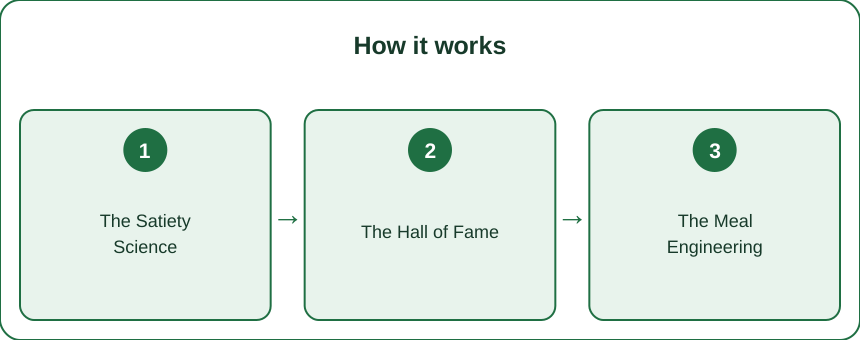
The Satiety Science
Why volume works: stomach stretch is a primary fullness signal (receptors respond to VOLUME, not calories — the body counts grams and liters before it counts energy; the same calories as soup versus snack bar produce wildly different fullness, and the research confirms it), water-rich foods dilute calorie density (the energy-density literature — pioneered by the Volumetrics research — is the trend’s academic backbone: people eat similar WEIGHTS of food daily, so lowering the calories-per-gram lowers intake without lowering satisfaction), and the eating experience matters (more bites, more minutes, more plate — the psychological meal is bigger too).
The Hall of Fame
The volume all-stars: the vegetable giants (zucchini, cabbage, mushrooms, cauliflower — near-free in calorie terms and shape-shifting in recipes), the fruit tier (berries and watermelon — dessert-sized portions at snack-sized calories), the broth-soup category (the most-studied volume trick: soup starters reliably reduce total meal intake in trials), popcorn (the snack world’s volume champion — air is the ingredient), potatoes (the satiety-index record holder, rehabilitated — boiled and roasted, not fried), Greek yogurt and cottage cheese (the protein-volume crossover), and eggs (small but satiety-dense — the protein assist). The unifying spec: high water, high fiber, honest protein.

The Meal Engineering
Building the big plate: the half-plate vegetable rule executed generously (the volume base costs almost nothing — the fajita bowl becomes enormous via peppers and onions, not rice), the soup-or-salad opener (the trial-backed first course that shrinks the main by stealth), the bulk-up techniques (zucchini folded into pasta — the half-and-half treaty; cauliflower stretching rice; mushrooms stretching any mince), the protein anchor always (volume without protein is hunger deferred — the fullness duo is stretch PLUS protein), and the fat honesty (fats are calorie-dense by definition — volume eating doesn’t exile them; it measures them while letting vegetables run free).
The Honest Boundaries
The fine print: volume eating serves fullness-driven eaters best (if your eating runs on stress or habit rather than hunger, stomach stretch solves the wrong problem — the mindful-eating toolkit is the companion volume), the fiber ramp rule applies (doubling plant volume overnight is a digestive plot twist — the gradual increase and water rules from the fiber world), it’s a pattern not a prison (the calorie-dense foods you love keep their seat — smaller, beside a bigger plate), and the athletic caveat (high-volume eating can UNDER-fuel heavy training — big engines sometimes need calorie density; the workout-nutrition math comes first). Done right, it’s the least miserable version of eating lighter ever invented: the plate gets bigger, the hunger gets quieter.
Stretch plus protein equals full, soup first works, potatoes are redeemed. Volume eating is satiety engineering — more food, fewer calories, zero martyrdom.
Keep Reading
This article is for general informational purposes only and is not medical advice. Always consult a qualified health professional for guidance specific to you.