Late Summer Produce Is Peak Volume Eating — Here Is How to Use It
Quick Answer: Late summer produce is unusually well suited to volume eating because the highest-water-content vegetables and fruits peak at once — tomatoes, cucumbers, zucchini, melon, and peppers all sit above 90 percent water. Build meals around those as the bulk, add protein for satiety, and use the six-week window to bank roasted and frozen bases for when the produce quality drops in October.
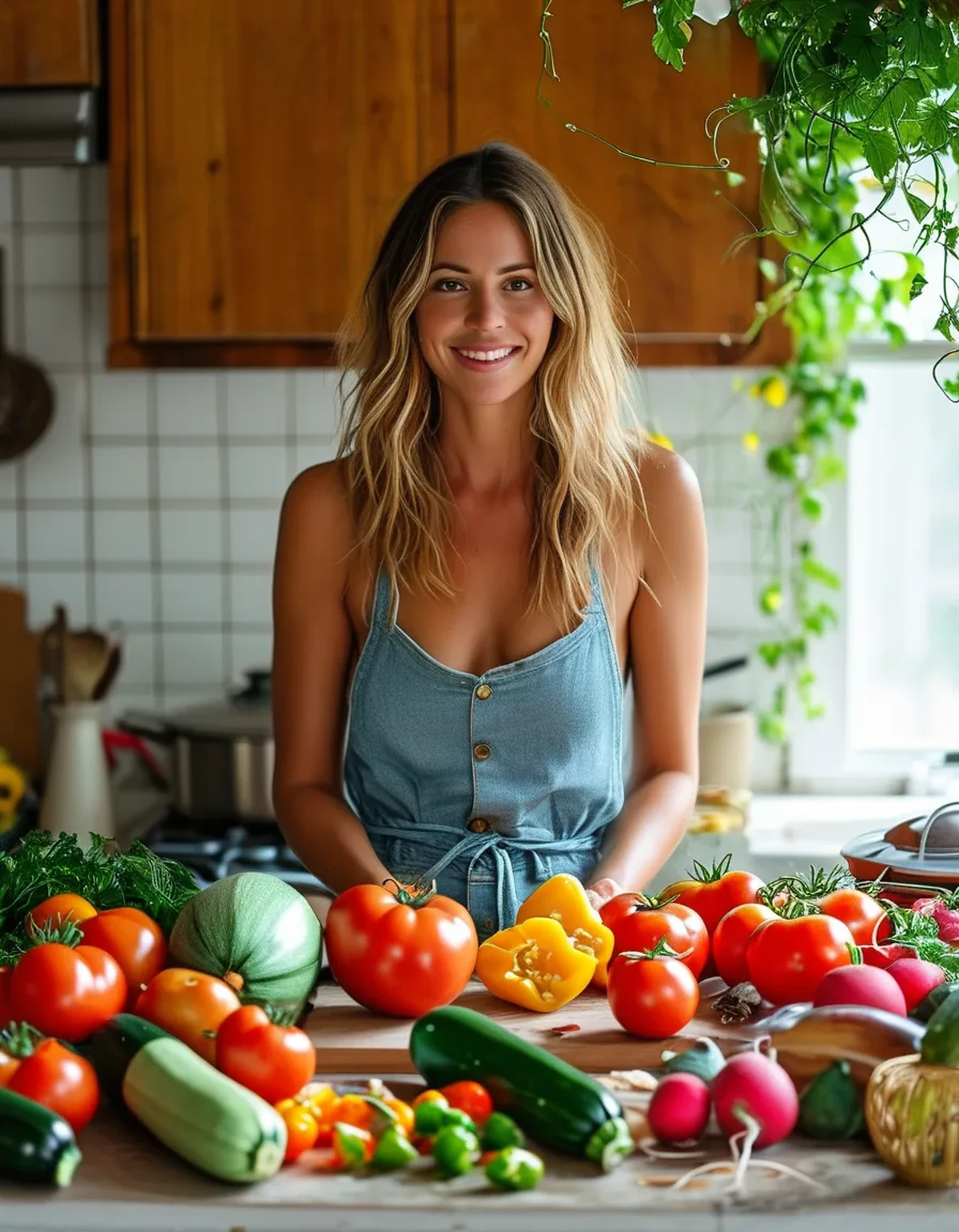
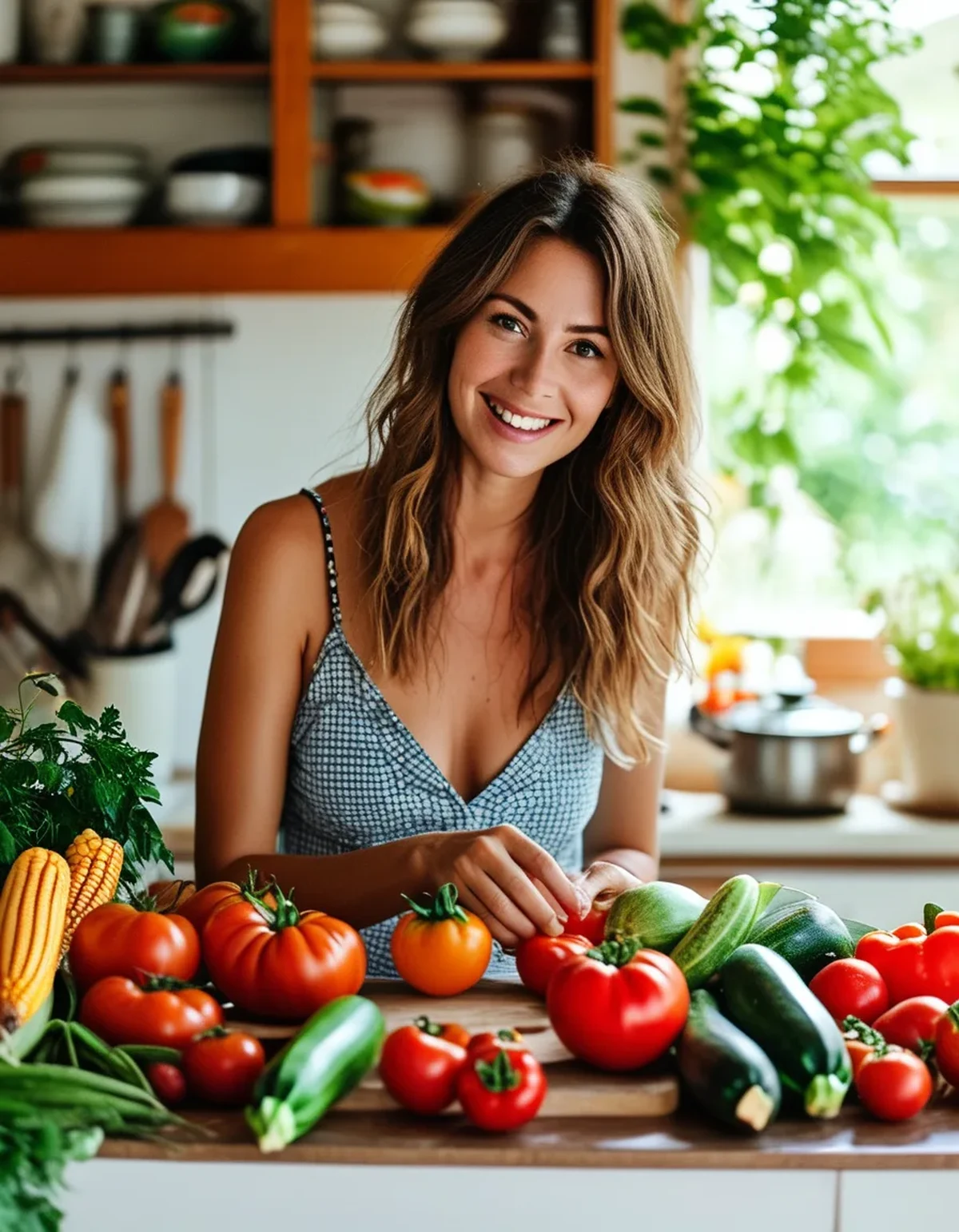
The farmers market right now is genuinely absurd — tomatoes for the price of nothing, zucchini that people are trying to give away, corn that does not need anything done to it.
This is the best six weeks of the year for eating a large volume of food for very few calories, and the fifth section is about not wasting it when the window closes.
Which late summer produce is actually best for volume?
Water content is the main lever, and the late summer list is exceptional.
Above 94 percent water: cucumber, iceberg and romaine lettuce, summer squash and zucchini, celery. These are the pure-volume items — you can eat a genuinely large plate for very little energy.
90 to 94 percent: tomatoes, watermelon, bell peppers, cantaloupe, strawberries, eggplant, cabbage. This is the sweet spot band because these have more flavor and texture than the top group while still being mostly water.
85 to 90 percent: peaches, plums, broccoli, green beans, cauliflower, carrots. Excellent bulk with more fiber and staying power.
The exception worth knowing: sweet corn is around 76 percent water and considerably more energy-dense than the rest of the late summer list. It is a fine food and it is not a volume item — treat it as part of the carbohydrate base rather than the bulk.
Why this matters more than fiber alone: research on energy density consistently finds that people tend to eat a fairly consistent weight of food rather than a consistent number of calories. Lowering the energy density of a meal by adding water-rich vegetables reduces intake without changing how full the plate looks or how satisfied people report feeling. Water bound inside food does this; a glass of water alongside does not do it nearly as well.
What does a late summer volume plate actually look like?
A simple structure that works for almost any meal in this window.
Half the plate: the water-heavy bulk. Raw or lightly cooked tomatoes, cucumber, peppers, zucchini, shredded cabbage. Cook it minimally — zucchini roasted to collapse loses a lot of its volume advantage, whereas quickly seared or raw-shaved zucchini keeps it.
A quarter: protein, and enough of it. This is where volume eating goes wrong most often. A plate of vegetables alone empties quickly, and you are hungry in ninety minutes. Aim for something in the range of 25 to 35 g of protein per main meal — grilled chicken, tinned fish, eggs, tofu, cottage cheese, beans.
A quarter: a satisfying base. Potato, rice, corn, bread, or beans. Volume eating that eliminates this entirely tends to collapse within a week because the meals stop feeling like meals.
Then fat, deliberately, in a small measured amount. Olive oil, feta, avocado, nuts. Fat is what makes vegetables taste like food rather than like a diet, and one tablespoon of good olive oil across a large plate is a genuinely good trade for the resulting adherence.
Three assemblies that work with almost no cooking:
Tomato and white bean plate — sliced tomatoes with salt, tinned white beans, cucumber, red onion, a little olive oil and vinegar, torn bread.
Shaved zucchini and chicken bowl — raw zucchini ribbons, grilled chicken, corn, herbs, lemon, feta.
Melon and cottage cheese — genuinely excellent, high volume, 20 g of protein, ready in one minute.
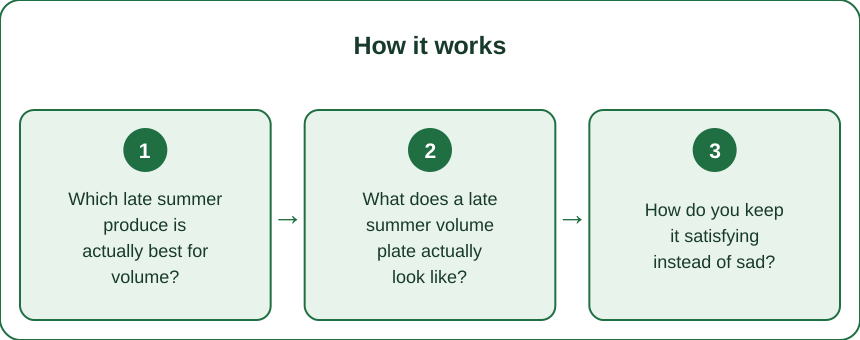
How do you keep it satisfying instead of sad?
Volume eating fails on flavor, not on calories, and late summer produce makes this easy.
Salt properly. Under-salted vegetables taste like obligation. Salting tomatoes and cucumbers ten minutes before eating also draws out water and concentrates their flavor — a free upgrade.
Acid on everything. Lemon, lime, vinegar. Acid makes low-fat food taste finished.
Texture contrast is the thing people miss. A plate of uniformly soft vegetables is depressing regardless of seasoning. Add something crunchy — raw pepper, a few toasted seeds, crisp lettuce, croutons.
Herbs in quantity, not as garnish. A full handful of basil, mint, cilantro, or dill changes a dish’s identity for essentially no calories. This is the highest-leverage flavor move in volume eating and most people use a tenth of what they should.
Temperature contrast. Warm protein on cold vegetables is more interesting than either alone.
Heat, if you like it. Chili adds intensity that makes a large plate feel like an event.
One properly good ingredient per plate. A little real parmesan, good olives, quality feta, proper olive oil. A small amount of something excellent does more for satisfaction than a large amount of something adequate, and it keeps the whole approach sustainable past week three.
5 Mistakes Everyone Makes With Volume Eating
Mistake 1: Treating protein as optional. The single most common failure. Volume without protein produces a full stomach and a hungry body two hours later, because gastric distension is only part of satiety — protein drives the hormonal side. If you are ravenous mid-afternoon, look at breakfast’s protein, not its size.
Mistake 2: Drowning it in dressing. Two tablespoons of a creamy dressing can carry more energy than everything under it. Measure it once so you know what you are actually using, then dress deliberately rather than pouring.
Mistake 3: Cooking the volume out. Roasting is delicious and it removes water, which is the entire point of these vegetables. Roast some, keep some raw or barely cooked, so the plate keeps its bulk.
Mistake 4: Buying more than you will realistically use. Late summer produce is cheap and abundant, and highly perishable. Buy for four days, not ten — the volume-eating plan that dies is usually the one with a crisper drawer full of liquefied zucchini and a fresh sense of guilt.
Mistake 5: Using volume as a rule instead of a tool. Volume eating is a strategy for making a lower-energy day feel satisfying. It is not a moral position, and a week of nothing but enormous vegetable plates tends to end in a spectacular reversal. Use it for the meals where it fits and eat normally at the ones where it does not.
FAQ: Late Summer Volume Eating Questions, Answered
What should I do when the good produce disappears in October?
Bank it now. Roast trays of tomatoes and peppers and freeze them; they collapse into a base for soups and sauces that carries summer flavor into November. Freeze corn off the cob. Cabbage, carrots, and winter squash take over the volume role in fall — lower water content but excellent bulk, and cabbage in particular is enormously underrated shredded raw.
Does eating this much fiber cause bloating?
It can if you ramp quickly. Increase over one to two weeks rather than doubling your vegetable intake overnight, drink enough water, and notice which specific items affect you — for many people it is a small number of culprits rather than vegetables in general. If bloating is severe or persistent, that is worth discussing with a healthcare provider. This is general information, not medical advice.
Is frozen produce as good for this?
For cooked applications, largely yes — frozen vegetables are typically picked and frozen at peak ripeness and retain their water content and most nutrients well. Where fresh wins in late summer is the raw applications, and that is exactly what this season is for. Use fresh for raw plates now, and rely on frozen once the season turns.
TL;DR:
- Late summer stacks the highest-water produce of the year into one six-week window.
- Build the plate half water-rich vegetables, a quarter protein at 25 to 35 g, a quarter satisfying base, plus deliberate fat.
- Salt, acid, herbs in real quantity, and texture contrast are what keep it from feeling like a diet.
- Do not cook the volume out — roast some, keep some raw.
- Bank roasted tomatoes and peppers in the freezer now for when October produce gets sad.
The reason to lean into this now rather than in January is that volume eating works best when the raw material is genuinely delicious. Right now it is, cheaply, everywhere. In four months it will take considerably more skill to make a plate of vegetables something you look forward to.
Keep Reading
This article is for general informational purposes only and is not medical advice. Always consult a qualified health professional for guidance specific to you.