Why Eating Order, Not Just Volume, Determines How Full a Meal Feels
Volume eating focuses almost entirely on choosing large, low-calorie-density foods, treating portion size as the main lever for feeling full. But the order food is eaten in during a single meal changes how the body responds, and eating protein and vegetables before carbohydrates blunts the blood sugar spike that drives hunger again soon after eating, on top of whatever volume is already on the plate.

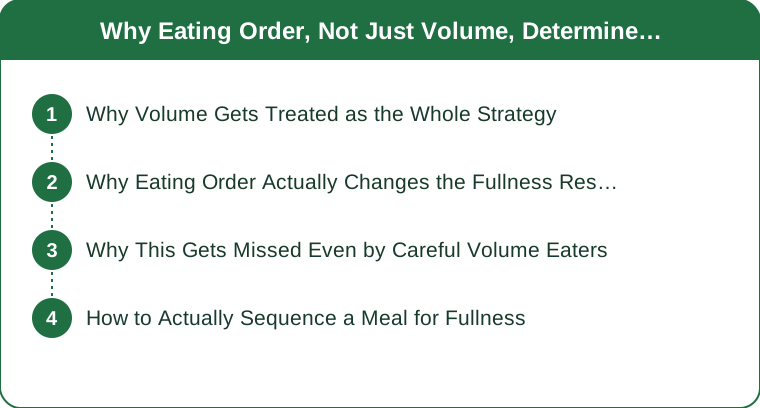
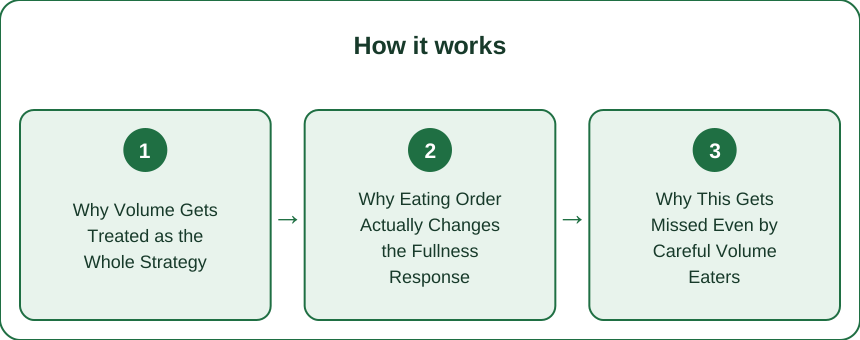
Why Volume Gets Treated as the Whole Strategy
The intuitive logic: a bigger plate of food, physically filling the stomach more, feeling like the most direct way to increase fullness, which makes portion size and calorie density the obvious focus for anyone trying to eat more filling meals.
Why Eating Order Actually Changes the Fullness Response
The blood sugar mechanism: eating fiber and protein first slows the absorption of carbohydrates eaten afterward in the same meal, blunting the blood sugar spike and subsequent crash that often triggers hunger again within an hour or two, meaning the same plate of food can feel more or less satisfying purely based on the sequence it’s eaten in.

Why This Gets Missed Even by Careful Volume Eaters
The overlap: someone can build a technically well-designed high-volume, low-calorie meal and still eat it in whatever order feels natural, carbs first out of habit, which means the volume strategy is only capturing part of the available benefit.
How to Actually Sequence a Meal for Fullness
The practical order: eating the protein and vegetable portions of a plate first, then finishing with any starches or carbohydrates last, regardless of how the plate is arranged, and the frame (eating protein and vegetables before carbs blunts the blood sugar spike that drives renewed hunger — sequencing a meal this way adds fullness on top of volume alone.)
Volume eating focuses almost entirely on choosing large, low-calorie-density foods, treating portion size as the main lever for fullness. But eating protein and vegetables before carbohydrates in the same meal slows carb absorption and blunts the blood sugar spike that often drives hunger again within an hour or two, meaning the same plate can feel more or less satisfying purely based on eating order. A technically well-designed volume meal eaten carbs-first out of habit only captures part of the available benefit. Eating protein and vegetables first, then finishing with starches last, is what adds fullness on top of volume alone.
Keep Reading
This article is for general informational purposes only and is not medical advice. Always consult a qualified health professional for guidance specific to you.