Why Volume Eating Stops Working the Moment the Weather Cools
Quick Answer: Cold weather increases appetite and shifts preference toward warm, energy-dense food, so cold high-volume meals stop registering as satisfying. The fix is not more volume — it is the same volume served warm, with more protein and fat than your summer version. Warm soups, roasted vegetables, and broth-based bowls hit the same fullness signals that a cold salad no longer reaches once the temperature drops.
The salad that felt like a full meal in July feels like a snack in late September, and it is not discipline that changed.
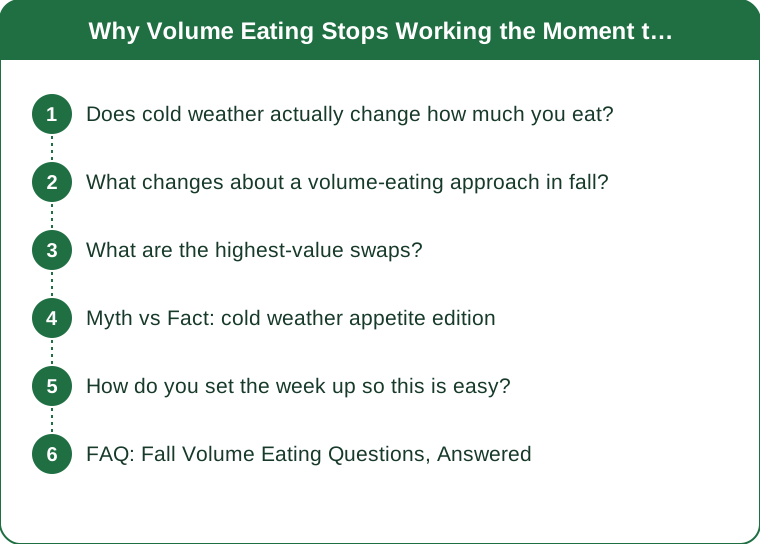
Does cold weather actually change how much you eat?
Yes, through a few mechanisms. Cooler ambient temperature increases energy expenditure for thermoregulation, which raises appetite signaling. Shorter daylight also shifts serotonin-related appetite patterns, which is part of why carbohydrate cravings rise in fall and winter.
There is a behavioral layer too. Warm food is more comforting when you are cold, and satisfaction from a meal is not purely a matter of stomach volume — temperature, texture, and richness all feed into the sensation of having eaten.
A cold meal in a cold room can be perfectly adequate in calories and protein and still leave you feeling like you did not eat. That gap is the real problem, because it usually gets closed with something at 9 p.m.
What changes about a volume-eating approach in fall?
The core principle holds — you still want high water content, high fiber, and enough protein. What changes is delivery.
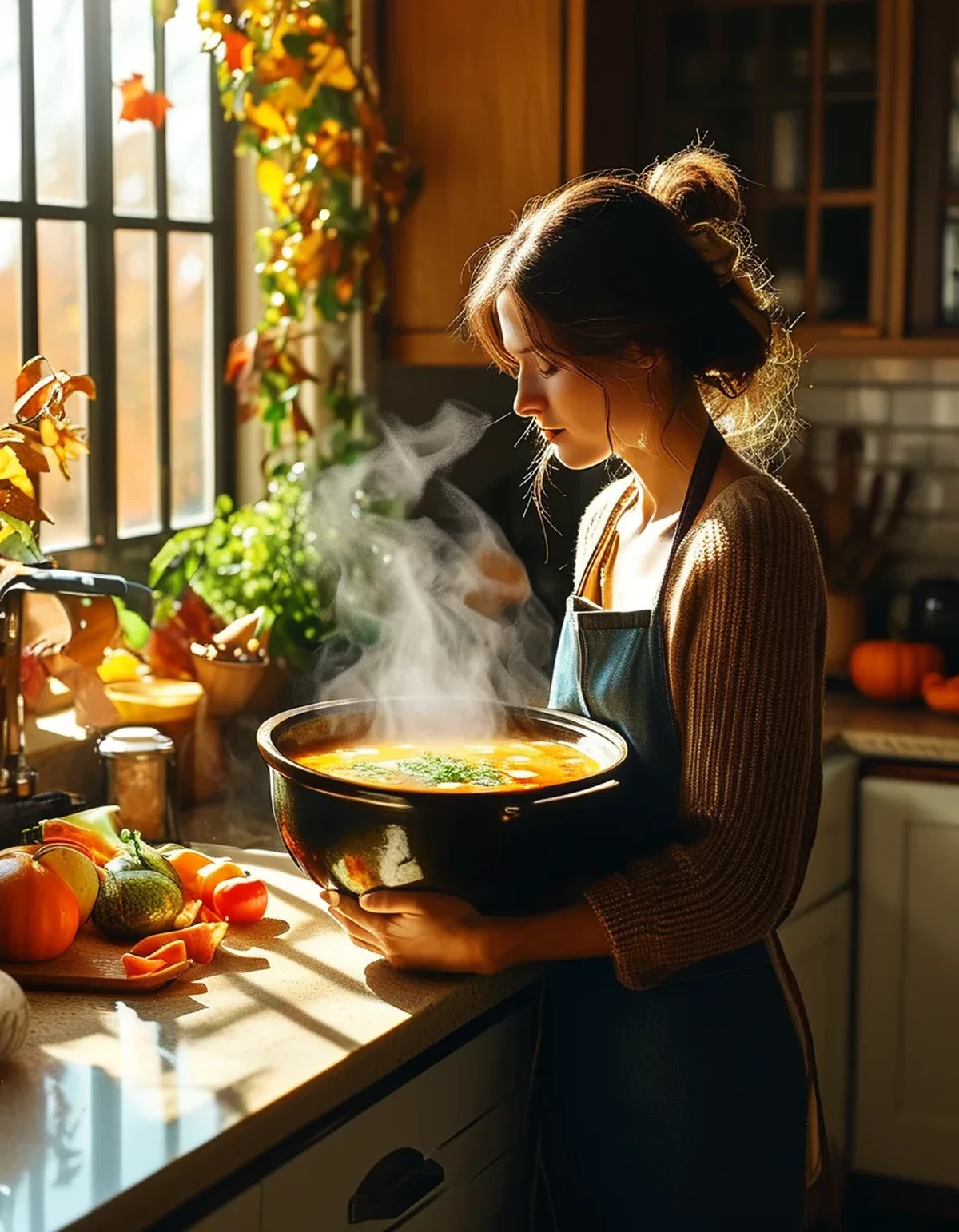
Soup is the single best fall volume-eating vehicle. A large bowl of vegetable-and-bean soup delivers enormous volume, high water content, and warmth simultaneously, and research on soup consumption before meals consistently shows it reduces subsequent intake.
Roasting replaces raw. Roasted vegetables lose water and therefore lose some volume, so you need more of them by weight to reach the same fullness — but they are dramatically more appealing in cold weather, and food you actually want to eat beats food that is technically optimal.
Raise the fat slightly. A tablespoon of olive oil on roasted vegetables adds 120 calories and substantially increases how satisfying the meal feels, which usually pays for itself in what you do not eat later.
What are the highest-value swaps?
Cold salad becomes a warm grain bowl. Same vegetables, same protein, served over a small portion of farro or barley with the vegetables roasted rather than raw.
Smoothies become oatmeal. A smoothie in a cold kitchen in October is a hard sell; steel-cut oats with the same fruit and a protein source hit better and hold longer.
Raw vegetable snacks become broth. A mug of well-salted broth between lunch and dinner covers the 4 p.m. gap that raw carrots used to cover in summer.
Cottage cheese and yogurt bowls move to the warm equivalent — savory cottage cheese stirred into hot soup, or Greek yogurt used as a base rather than eaten cold on its own.

Myth vs Fact: cold weather appetite edition
Myth: Fall appetite increase means your metabolism slowed. Fact: It is closer to the opposite. Thermoregulation in cooler temperatures raises energy expenditure modestly, and appetite tracks it.
Myth: Cooking vegetables destroys their value. Fact: Cooking reduces some nutrients and increases the availability of others. Roasted vegetables you eat beat raw ones you skip.
Myth: Volume eating means you should never eat energy-dense food. Fact: Volume eating is a strategy for managing hunger, not a rule about food types. A small amount of dense food inside a high-volume meal often improves adherence dramatically.
Myth: Feeling hungrier in fall means you will gain weight. Fact: Only if intake outruns expenditure. Increased appetite is a signal to manage, not an outcome to accept.
How do you set the week up so this is easy?
Make one large pot of soup on Sunday. This is the highest-leverage single action for fall volume eating, because it converts the hardest meal decision of the week into a reheating job.
Roast two full sheet pans of vegetables at once. Cauliflower, broccoli, carrots, and squash all hold well for three or four days and become the base of grain bowls, soup additions, and egg dishes.
Keep boxed broth and frozen vegetables permanently stocked. The 15-minute soup you can make from a freezer bag and a carton is what protects you on the day the Sunday batch runs out.
And move your largest meal earlier if your schedule allows. Fall hunger tends to concentrate in the evening, and a substantial lunch does more to control that than a large dinner does.
FAQ: Fall Volume Eating Questions, Answered
Does soup really keep you full or does it pass through quickly?
Broth-based soups with fiber and protein empty from the stomach more slowly than the same ingredients eaten separately with a glass of water. The blending and the heat both contribute.
Should I eat more in fall or hold my summer intake?
Depends on your goal, but forcing summer intake through a cold season is where most people break. A modest increase you plan beats a large one you did not.
Is warm water or tea a legitimate volume tool?
As a between-meal strategy, yes, and it works better than cold water in cold weather because people actually drink it. It does not replace food volume in a meal.
TL;DR:
- Cold weather raises appetite through thermoregulation and shorter daylight, not a metabolic problem.
- Cold high-volume meals stop registering as satisfying even when the numbers are identical.
- Swap raw for roasted, smoothies for oats, and build the week around one large pot of soup.
- A little added fat improves satisfaction enough to pay for itself.
Volume eating is not a summer technique that fails in fall. It is a technique that needs a temperature adjustment, and the adjustment takes about one Sunday afternoon to set up.
Keep Reading
This article is for general informational purposes only and is not medical advice. Always consult a qualified health professional for guidance specific to you.